




B2B Digital Marketing Services: Strategies for Reaching Business Decision-Makers
Prepared 2026-10-30
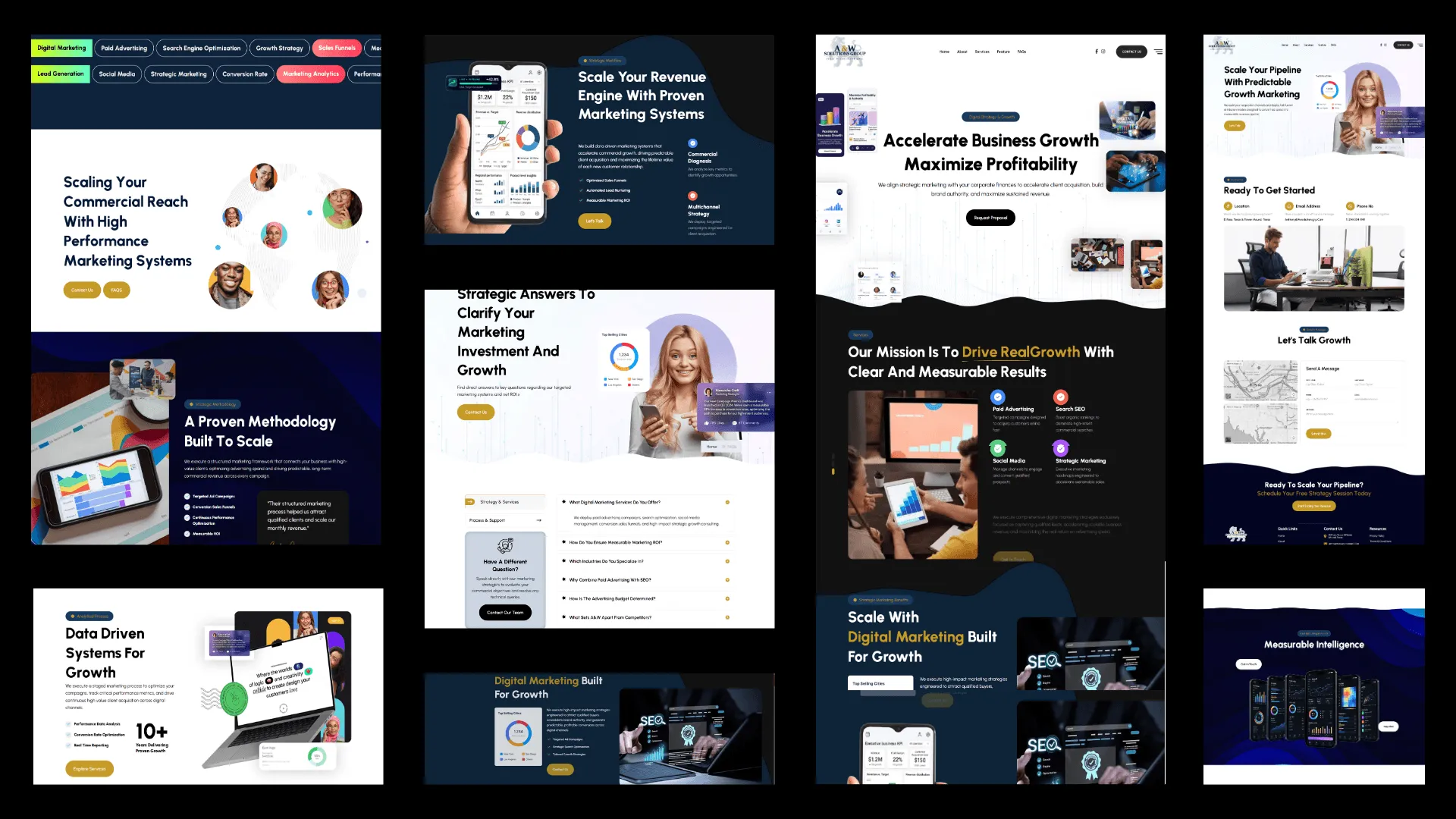
B2B digital marketing services help businesses reach decision-makers by connecting a clear offer with the questions buyers ask as they research, compare, and approve solutions. The strongest programs do not simply generate attention: they make it easier for the right prospect to understand the business problem, evaluate the approach, and start a relevant sales conversation.
What B2B digital marketing must accomplish
B2B digital marketing services should help a business earn attention from the right companies, explain a complex offer clearly, and create a practical next step for prospective buyers. Unlike a quick consumer purchase, a business purchase may involve several people with different concerns: operational fit, financial value, technical feasibility, risk, and implementation effort. Marketing should give each stakeholder enough useful information to move the conversation forward.
| Channel or asset | Best role | Practical decision-maker question it can address |
|---|---|---|
| Service or solution page | Explain a focused offer and conversion path | Is this relevant to my business problem? |
| Educational article | Help visitors understand a problem or approach | What options should we consider? |
| Focused landing page | Support a specific campaign or offer | What should I do next? |
| Email follow-up | Continue a requested conversation with relevant information | What details do I need before speaking with someone? |
| Sales follow-up process | Route and respond to qualified inquiries | Who will help assess our situation? |
Start with the buying committee, not a broad audience
A useful strategy identifies the types of companies you want to serve, the problems that prompt them to search for help, and the people who influence a purchase. A business owner may care about growth and cost control; an operations leader may care about removing bottlenecks; a technical reviewer may need clarity on integrations, access, and workflow requirements. These perspectives can inform targeted pages, campaign messages, sales materials, and follow-up sequences.
Questions to answer before planning campaigns
- Which types of businesses are the best fit for the offer?
- What event or recurring problem causes them to seek help?
- Which roles can request, influence, approve, or use the solution?
- What concern might prevent each role from moving forward?
- What information should a prospect see before booking a conversation?
Build a message around an observable business problem
Decision-makers are more likely to engage when they can quickly see how an offer connects to a current problem. Rather than leading with a long list of services or technology terms, state the operational challenge, explain the approach, and describe what a buyer should evaluate. For example, a company that manually moves customer data between systems may need an integration and workflow discussion, while a business with a weak lead flow may need a website, search, advertising, and conversion review.
Use specific, plain-language framing. “We help professional service firms reduce manual lead handoffs” is easier to evaluate than a broad statement about providing digital solutions. The goal is not to oversimplify a complex service; it is to make the starting point understandable enough for a prospective buyer to recognize a fit.
Use your website as a decision-support tool
A B2B website should do more than introduce the company. It should help a prospective buyer understand who the service is for, what business situation it addresses, how engagement works, and what to do next. Service pages can address specific needs such as website redesigns, local SEO, ecommerce, workflow automation, custom CRM planning, or business software integrations. Clear calls to action, focused landing pages, and contact paths reduce unnecessary friction for qualified prospects.
- Lead with the customer situation or outcome the page addresses.
- Explain the service in business terms before introducing technical details.
- State what a prospect can expect from an initial conversation or review.
- Provide one clear next step that fits the page’s intent.
- Make contact forms and conversion paths easy to understand and complete.
Create content for different stages of evaluation
Early-stage content helps a reader frame a problem and understand options. Mid-stage content can compare approaches, explain process considerations, or offer implementation checklists. Later-stage material should answer practical questions about scope, responsibilities, existing systems, content, measurement, and next steps. One article rarely needs to persuade every buyer on its own; the objective is to help the right visitor take an informed next action.
| Evaluation stage | Buyer need | Helpful content approach |
|---|---|---|
| Problem recognition | Name and understand an operational or growth issue | Explainer articles and diagnostic checklists |
| Option evaluation | Compare possible approaches and trade-offs | Comparison guides, process explainers, and planning resources |
| Solution assessment | Assess fit, scope, and readiness | Service pages, discovery guidance, and implementation questions |
| Conversation and follow-up | Decide whether to engage and what to prepare | Clear contact paths and relevant follow-up materials |
Coordinate channels instead of treating them as separate tactics
B2B marketing channels work best when they reinforce one another. Search-oriented pages can capture people researching a known problem. Paid campaigns can test focused offers or reach a narrowly defined audience more quickly. Email can continue a relevant conversation after someone requests information or downloads a resource. Direct sales follow-up should reflect what the prospect asked about rather than restarting the conversation with a generic pitch.
- Choose one offer and the audience most likely to need it.
- Create a focused page that explains the problem, approach, and next action.
- Select the channel most likely to introduce that page to the intended audience.
- Decide how the inquiry is captured, routed, and acknowledged.
- Prepare follow-up information that matches the visitor’s stated interest.
- Review the quality of resulting conversations and adjust the message, page, or targeting.
Measure progress from attention to qualified conversations
Traffic alone does not show whether a B2B marketing program is useful. Review how visitors arrive, which pages support engagement, whether forms and calls create meaningful inquiries, and how inquiries progress after contact. Define what qualifies as a worthwhile lead before reporting results. A high volume of unqualified submissions can consume sales time without improving the pipeline, while a smaller number of well-matched conversations may be more valuable.
Measurement should be agreed upon by the people responsible for marketing and sales. A practical reporting view can connect source, landing page, inquiry type, qualification status, follow-up outcome, and next sales step. This is also where a custom CRM or integration may help bring scattered information into a more usable workflow, provided the business first defines the process it wants to support.
Avoid common B2B marketing mistakes
- Targeting every industry and buyer type with one generic message.
- Sending campaign traffic to a homepage that does not match the ad or search query.
- Publishing articles without a defined buyer question or next step.
- Collecting inquiries without a documented response and routing process.
- Reporting on clicks or traffic without reviewing lead quality and sales progression.
- Adding AI, automation, or software tools before defining ownership, workflow, data access, and human review.
New marketing platforms do not fix an unclear offer or inconsistent process. Start by mapping the buyer journey, defining a small number of priority audiences and offers, reviewing the website path, deciding how leads will be captured and routed, and selecting measurements that sales and marketing can both use. Technology should support this plan, whether that means analytics, advertising platforms, email automation, a custom CRM, integrations, or an AI assistant connected to approved company knowledge.
Choose a focused first improvement
Choose one business problem, one priority audience, and one conversion action to improve first. Create or refine the supporting page, establish how inquiries are handled, and review the results with the people responsible for sales. This focused approach makes it easier to learn what resonates before expanding into additional channels or campaigns.
DLR Vortex Solutions can help businesses connect website strategy, SEO, paid marketing, automation, and business systems around a clearer lead-generation process. If you want help assessing the gaps between your website, campaigns, lead handling, and business systems, schedule a consultation today!
Frequently asked questions
What are B2B digital marketing services?
B2B digital marketing services are the planning and execution activities used to help one business reach and engage prospective business customers. Depending on the need, they may include website strategy, SEO, content, paid advertising, email follow-up, conversion optimization, analytics, automation, and integrations. The right mix depends on the target audience, offer, buying process, and internal sales capacity.
How is B2B marketing different from consumer marketing?
B2B marketing generally needs to support a more considered purchase process. The buyer may need to involve multiple stakeholders, assess operational fit, compare approaches, and obtain internal approval. Marketing should therefore provide clear, relevant information that helps people evaluate a business problem and determine whether a conversation is worthwhile.
Which B2B digital marketing channel should a small business start with?
Start with the channel that best matches a defined audience, a specific business problem, and a clear next action. For a business already being searched for, a focused service page and search visibility may be a useful starting point. For a time-sensitive or tightly defined offer, a focused paid campaign and landing page may be appropriate. The website and lead-follow-up process should be ready before increasing promotion.
What should a B2B landing page include?
A B2B landing page should clearly identify the intended audience or problem, explain the offer in plain language, provide enough context for evaluation, and present a relevant next action. It should also match the message that brought the visitor there, whether from an ad, email, search result, or referral.
How should a business measure B2B marketing results?
Measure activity across the path from discovery to sales conversation: where inquiries come from, which pages or campaigns contribute to them, whether the inquiry matches the intended customer profile, and what happens after follow-up. Define lead quality with the sales team so reporting does not overvalue volume without relevance.
Can AI or automation replace B2B marketing and sales work?
AI and automation can support repeatable tasks, information access, routing, drafting, and workflow coordination, but they do not automatically create an effective strategy or guarantee accurate output. A business should define the workflow, data boundaries, review responsibilities, and desired customer experience before introducing automation.
Related reading
Schedule a consultation today!
Recent Posts


November 20, 2026
Ecommerce Product Page SEO: A Practical Optimization Checklist

November 19, 2026
How to Reduce Cart Abandonment on a WooCommerce Store
Related Articles
Technical SEO Audit Guide: How to Find and Prioritize Website Problems
Warning: Undefined variable $taxonomy in /home/u765721910/websites/azJno66uV/public_html/wp-content/themes/bw-digiflow/bzotech-templates/posts/grid/grid-style2.php on line 50



Leave a comment