


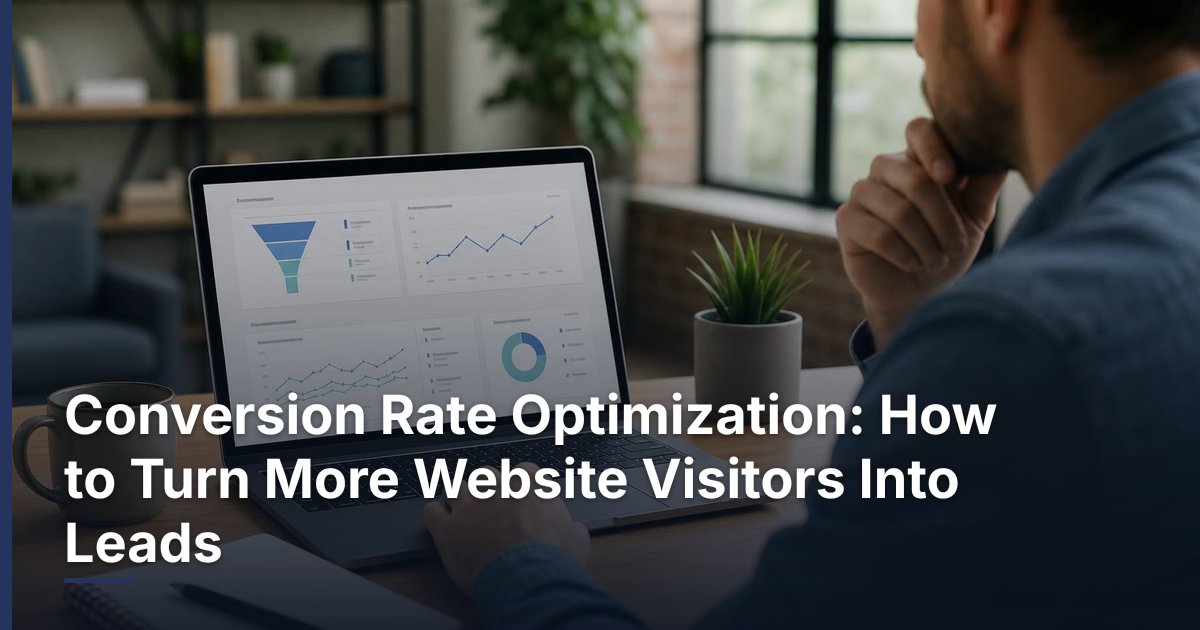
Conversion Rate Optimization: How to Turn More Website Visitors Into Leads
IN THIS ARTICLE
Conversion rate optimization helps businesses get more value from relevant website traffic by making it easier for visitors to become leads. The most useful improvements are often practical: clear service messaging, a focused next step, a straightforward form, and a landing page that matches why the visitor arrived.
| Conversion issue | What visitors may experience | What to review |
|---|---|---|
| Unclear primary action | Uncertainty about what to do next | Whether one action is prioritized on the page |
| Generic calls to action | Little context about the next step | Whether button language matches the page and visitor intent |
| Long or confusing forms | Extra effort before making an inquiry | Whether every field is needed for the initial response |
| Message mismatch | Doubt that the page matches the search or ad | Whether the landing-page content reflects the entry message |
| Missing service details | Difficulty deciding whether the business is a fit | Whether the page explains services, problems addressed, and the next step |
What conversion rate optimization means for lead generation
Conversion rate optimization (CRO) is the process of improving the percentage of website visitors who take a meaningful next step, such as requesting a consultation, submitting a contact form, calling your business, or downloading a useful resource. For a lead-generation website, CRO is not about pushing every visitor into a form. It is about making the right action clear, relevant, and easy for a prospective customer who is ready to continue the conversation.
Start with one clear conversion goal per page
A page can support more than one action, but it should have one primary goal. A service page may prioritize consultation requests, while a local landing page may prioritize calls. When several buttons compete for attention or lead visitors toward unrelated actions, decision-making becomes harder. Define the primary action before changing design, copy, or forms, then make that action visually and contextually consistent across the page.
Clarify the offer before changing the design
Many conversion problems begin with unclear messaging rather than a missing design feature. A visitor should be able to quickly understand what you provide, who it is for, and what the next step involves. Replace vague statements with specific service language. For example, a business technology provider can explain whether it helps with websites, SEO, automation, custom CRM, integrations, or another defined need. Supporting details should answer common questions about the process, scope, and appropriate fit without overwhelming the reader.
Make calls to action specific and relevant
Generic button labels can leave visitors unsure about what happens next. Match the call to action to the page and the visitor’s level of intent. Someone reviewing a service may be ready to schedule a consultation, while someone reading an educational article may prefer to request an assessment or ask a question. Place a primary call to action near the top of the page and repeat it after important decision-making information. The surrounding copy should set expectations about the conversation or request rather than relying on the button alone.
Reduce form friction without losing lead quality
Every form field asks a visitor for time and information. Ask for what your team genuinely needs to respond appropriately, and consider whether other details can be gathered later. A short inquiry form may be appropriate for an initial consultation, while a more detailed project request may be better for visitors who already understand the service. Clear field labels, helpful error messages, a visible privacy explanation when applicable, and a confirmation message after submission can make the process easier to complete.
Build trust where visitors need it
Visitors often hesitate because they are unsure whether a business understands their needs or whether taking the next step will be worthwhile. Use the page to address practical concerns: the services offered, the types of problems addressed, the expected next step, and how to get in touch. Keep claims accurate and avoid unsupported promises. Useful service details, plain-language process explanations, and consistent contact information can help visitors evaluate whether your business is a fit.
Improve the path from search result to conversion
Conversion rate optimization begins before a visitor reaches the page. The page title, meta description, ad message, or local listing should align with the content and action on the landing page. If someone searches for WordPress website redesign services, they should arrive at a page that directly addresses redesign needs rather than a broad homepage with several unrelated paths. Message alignment helps visitors confirm they are in the right place and reduces unnecessary navigation.
Use measurement and testing to guide changes
CRO works best as an ongoing process. Review how visitors reach a page, which actions they take, where they leave, and whether submitted leads are relevant to the business. Use those observations to form a focused hypothesis, such as whether a clearer service summary or a simplified form could help more qualified visitors take action. Change one meaningful element or a small related group of elements at a time, then review the outcome before drawing conclusions. Avoid treating more form submissions as the only measure of success; lead quality and sales follow-up matter too.
Common conversion issues to review first
Begin with pages that receive relevant traffic but do not produce the inquiries or calls you expect. Check whether the page has a clear primary action, whether mobile visitors can easily read and use it, whether forms work correctly, and whether important service information is easy to find. Also review page speed, confusing navigation, outdated offers, and broken tracking. Technical issues and unclear messaging can both prevent otherwise interested visitors from converting.
A practical next step for your website
A better conversion experience comes from understanding visitor intent, removing unnecessary obstacles, and giving qualified prospects a clear reason to contact you. DLR Vortex Solutions can help businesses review website messaging, lead paths, forms, analytics, and connected business workflows as part of a practical digital growth plan. If you want to identify the next improvements for your website, Schedule a consultation today!
PUT IT INTO PRACTICE
Your next steps
- Identify the primary action for each high-value service or landing page.
- Review the first screen of each page for a clear explanation of the service and next step.
- Check forms for unnecessary fields, unclear labels, error messages, and confirmation messages.
- Confirm that search, ad, and listing messages match the landing page visitors reach.
- Test key pages and forms on mobile devices.
- Review lead sources and lead quality before deciding which CRO change to make next.
CONTINUE THE CONVERSATION
Schedule a consultation today!
Recent Posts


November 20, 2026
Ecommerce Product Page SEO: A Practical Optimization Checklist

November 19, 2026
How to Reduce Cart Abandonment on a WooCommerce Store
Related Articles
Technical SEO Audit Guide: How to Find and Prioritize Website Problems
Warning: Undefined variable $taxonomy in /home/u765721910/websites/azJno66uV/public_html/wp-content/themes/bw-digiflow/bzotech-templates/posts/grid/grid-style2.php on line 50


Leave a comment